
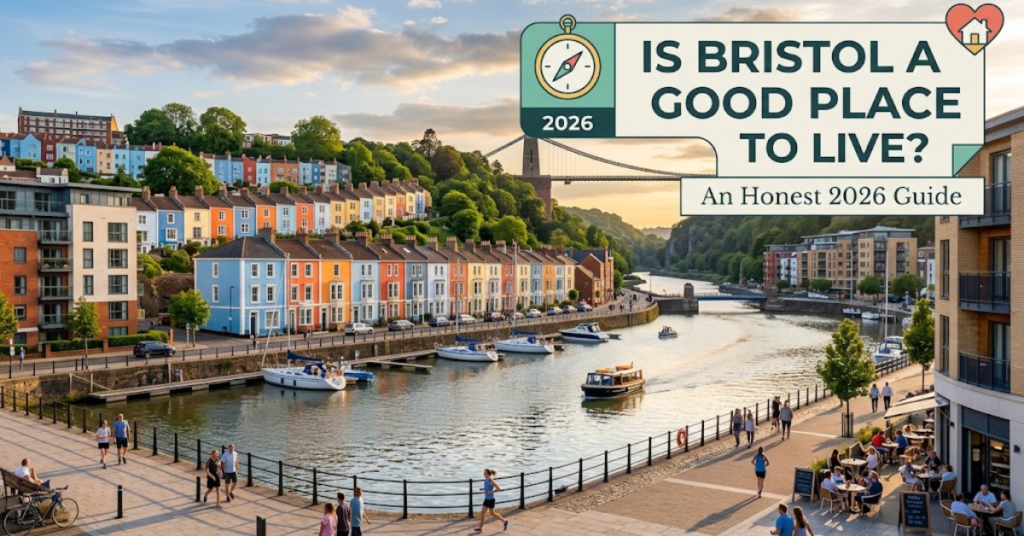
Is Bristol a Good Place to Live? An Honest 2026 Guide
Figures in this guide were checked against official and published sources in 2026. Housing costs move quickly, so confirm current prices before you commit to a move.
Bristol regularly shows up on “best cities to live in” lists, and it is easy to see why. It has a harbourside, big green spaces, two universities and a creative streak that feels very different from most English cities. It also has some of the highest housing costs outside London and traffic that locals complain about constantly. So is Bristol a good place to live? For many people yes, but it depends heavily on your budget, your job and which part of the city you choose.
The short answer
Bristol is a good place to live if you want a lively, culturally rich, fairly green city and can afford its housing. It is a harder sell if you are on a tight budget, rely on public transport, or expect a quiet, cheap regional city. With a population of roughly 470,000, it is among the largest cities in the UK, and it feels more like a collection of distinct neighbourhoods than one uniform place.
What Bristol does well
Culture, food and independent businesses
Bristol is known for independent cafés, restaurants, music venues and street art. Housing guides for the city consistently point to its independent businesses and green spaces as a major part of daily life, and the harbourside area is the go-to for pubs and restaurants.
Universities and a strong job market
The city is home to the University of Bristol, a Russell Group university, and UWE Bristol. Together they bring a large student population and a steady flow of skilled graduates. Bristol’s economy is broad, with aerospace, finance, technology and creative industries all well represented, which gives workers more options than many comparable cities.
Green space and a walkable feel
Parks, downs and woodland sit close to the centre, and many neighbourhoods have their own high street with local shops. If you value being able to walk to a café or a park, Bristol delivers.
Good access to the wider South West
Bath and the Cotswolds are within easy reach, and the city is well linked to other major cities and the rest of the region by road and rail.
Also Read About: Cheapest Countries to Visit
Where Bristol falls short
Housing is expensive
This is the biggest drawback, and the official numbers are clear. According to the Office for National Statistics:
- The average house price in Bristol was about £352,000 in July 2026, up 2.1% on a year earlier.
- Average private rent reached about £1,883 a month in August 2026, up 5.9% from £1,778 a year earlier. That is a faster rise than the South West average of 4.4%.
- First-time buyers paid an average of about £313,000.
By comparison, the average price for a home bought with a mortgage across Great Britain was around £282,000 in July 2026, so Bristol sits well above the national picture.
Traffic and patchy public transport
Traffic in Bristol can be heavy, especially in the city centre and on the M32 at peak times. The bus network is large, and more bus lanes have been added, but buses still get caught in congestion. Resident surveys in some inner wards show strong dissatisfaction with congestion and bus services. If you can live close to your workplace or near a rail station such as Temple Meads or Redland, daily life is easier.
Crime varies a lot by area
Bristol is not uniformly safe or unsafe. Crime rates differ sharply between neighbourhoods. The central ward recorded around 477 crimes per 1,000 residents in 2022-23 against a city average of about 114, which reflects the concentration of nightlife and visitors in the centre as much as residential risk. Quieter suburbs tend to be far lower. Check police crime maps for the specific streets you are considering rather than judging the whole city.
What does it cost to live in Bristol?
Cost estimates differ between sources because they use different methods, so treat the ranges below as a guide rather than exact prices.
| Item | Typical range |
|---|---|
| Room in a shared house | about £600 a month |
| 1-bed flat, outside the centre | about £990 to £1,100 a month |
| 1-bed flat, city centre | about £1,200 to £1,400 a month |
| 3-bed home, outside the centre | about £1,570 to £2,000 a month |
| Single person’s costs excluding rent | about £690 to £920 a month |
| Council tax, Band D | roughly £2,200 a year |
Most comparisons put Bristol cheaper than London but more expensive than most other big UK cities. One 2026 comparison put the typical monthly cost for one person in Bristol at roughly 30% below London and above Birmingham, Manchester, Glasgow and Liverpool. For people leaving London, Bristol can feel like relief. For people coming from the North or Midlands, it often feels steep.
Also Read About: Best Time to Visit Nova Scotia
Best areas to live in Bristol
Different areas suit different lives:
- Clifton: Victorian streets, strong schools and a village feel, about 10 to 15 minutes from the centre. It is also among the priciest areas.
- Redland: Popular with families and professionals, with good schools, independent shops and its own railway station.
- Henleaze and Stoke Bishop: Quieter, leafy and often described as some of the safer parts of the city, favoured by families.
- Southville and Bedminster: Lively, creative areas that tend to cost less than Clifton while staying close to the centre.
- Southmead: Frequently named as one of the more affordable areas.
- Harbourside and city centre: Best for nightlife and convenience, with higher rents and more noise.
Schools
Bristol has a wide mix of state and independent schools. Redland Green School and Montpelier High School are among the well-regarded secondaries often named by local guides. School quality is very area-specific, so check the latest Ofsted reports and catchment rules for any address you are serious about.
Who should move to Bristol?
Bristol tends to suit:
- Students and graduates who want a big university city with a social scene
- Professionals in aerospace, finance, tech or creative fields
- People leaving London who want more space and green areas for a lower, though still high, cost
- Anyone who prefers a walkable, independent-minded city over a car-dependent one
It may suit you less if you are on a low income and need cheap housing, you depend on a long daily commute by road, or you want a quiet, low-cost city.
Bottom line
Bristol is a genuinely good place to live for people who value culture, green space and career options and who can absorb high housing costs. The affordability gap is real and rising: with average rent near £1,883 a month and average house prices around £352,000, it is no bargain. Choose your neighbourhood carefully, plan your commute around public transport or cycling where you can, and visit at different times of day before signing a lease.
Also Read More Informational Articles At: worldtrendsblog.com