
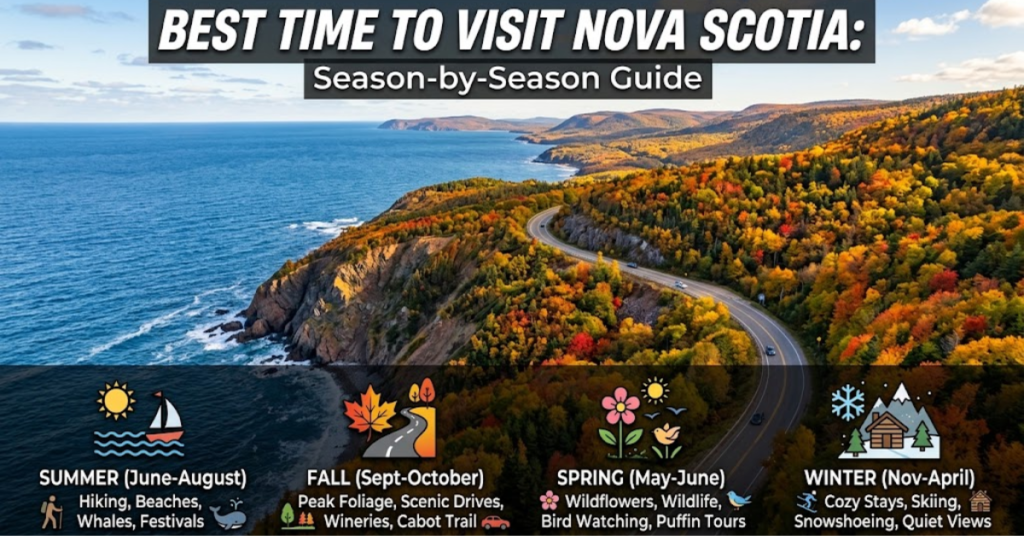
Best Time to Visit Nova Scotia: Season-by-Season Guide
Choosing the best time to visit Nova Scotia depends on what you want from the trip. Beaches and festivals, fall colours on the Cabot Trail, whale watching, or quiet winter getaways each fit a different part of the year. This guide breaks down each season so you can match your travel dates to your plans.
Quick Answer
For most travellers, July to September is the best time to visit Nova Scotia: warm weather, open attractions, and plenty of events. If you want fewer crowds and spectacular scenery, late September to mid-October is a close favourite.
Summer (June to August)
Summer is peak season, and for good reason. Days are long and mild, coastal towns are lively, and almost every tour, ferry, and seasonal restaurant is open.
Best for: beaches, road trips, festivals, whale watching, sea kayaking, and lobster dinners.
- The warmest swimming is usually along the Northumberland Strait, where the water is gentler than on the Atlantic coast.
- Whale watching tours typically run from early summer into autumn, with Cape Breton and the Bay of Fundy being popular departure areas.
- Halifax and many smaller towns host music, food, and cultural festivals through July and August.
Keep in mind: Prices are highest, accommodation books up early, and the Atlantic coast can be foggy, especially in early summer. Book popular areas such as the Cabot Trail well ahead.
Fall (September to October)
Many locals consider autumn the best season. Crowds thin out, the air is crisp, and the forests turn red and gold.
Best for: fall foliage, scenic drives, hiking, and food and wine.
- Foliage on Cape Breton Island typically peaks around early to mid October, though timing shifts from year to year.
- September still feels like summer in many places, with warm days and fewer visitors.
- The Annapolis Valley has harvest season, with farm markets and wineries at their best.
- Cape Breton’s well-known autumn music festival draws visitors in October, so book early if you plan to attend.
Keep in mind: Some seasonal businesses close after Labour Day or Thanksgiving. Late-season storms can also affect the coast, so keep your plans flexible.
Also Read About: Can I Travel to Turkey
Spring (April to May)
Spring arrives slowly in Nova Scotia. It is a quiet, budget-friendly time, but it is not for everyone.
Best for: low prices, peaceful scenery, and travellers who want to avoid crowds.
- Hotels and car rentals are usually cheaper.
- Late May and June bring blooming spring flowers and, in some areas, the chance to see seabirds such as puffins on boat tours.
- Many tourist services are still opening, so check operating dates in advance.
Keep in mind: Weather can be cool, wet, and unpredictable, and some attractions and trails may not be fully open until late May or June.
Winter (November to March)
Winter is the least popular season for visitors, but it has its own appeal for people who enjoy cosy, off-season travel.
Best for: skiing, snowshoeing, cosy stays, and city breaks in Halifax.
- Small ski hills offer a relaxed alternative to larger resorts.
- Halifax and other towns stay open year-round, with museums, restaurants, and holiday events.
- Coastal storms and snow can disrupt road travel, so check forecasts and allow extra time.
Keep in mind: Many seasonal attractions, lodgings, and tours close, and daylight hours are short.
Best Time to Visit by Activity
| If you want to… | Go in… |
| Swim at the beach | July to August |
| See fall colours | Late September to mid October |
| Go whale watching | Summer to early fall |
| Drive the Cabot Trail | September to early October |
| Avoid crowds and save money | May, early June, or late October |
| Try winter sports | January to February |
Tips for Planning Your Trip
- Book early for July, August, and October, especially on Cape Breton Island.
- Pack layers. Even in summer, coastal weather can change quickly.
- Rent a car. Public transport is limited outside Halifax, and a car gives you freedom to explore.
- Check opening dates. Tours, ferries, and attractions have seasonal schedules, so confirm before you go.
- Allow time to drive. Distances look short on a map but scenic roads are slower than highways.
Final Thoughts
There is no single perfect month to visit Nova Scotia, but there is a perfect month for your trip. Choose summer for beaches and festivals, early autumn for scenery and fewer crowds, and spring or winter if you prefer a quiet, budget-friendly escape.
FAQs
What is the best month to visit Nova Scotia?
September is a favourite for many travellers, offering pleasant weather, fewer crowds, and most attractions still open. July and August are best if you want the warmest weather.
When is the cheapest time to visit Nova Scotia?
Spring and late fall generally have the lowest prices, while July and August are the most expensive.
When can you see fall colours in Nova Scotia?
Typically from late September through mid October, with Cape Breton Island often peaking in early to mid October.
Is Nova Scotia worth visiting in winter?
Yes, if you enjoy quiet travel, skiing, and cosy stays, but expect shorter days and limited seasonal services.
Also Read More Informational Articles At: worldtrendsblog.com