
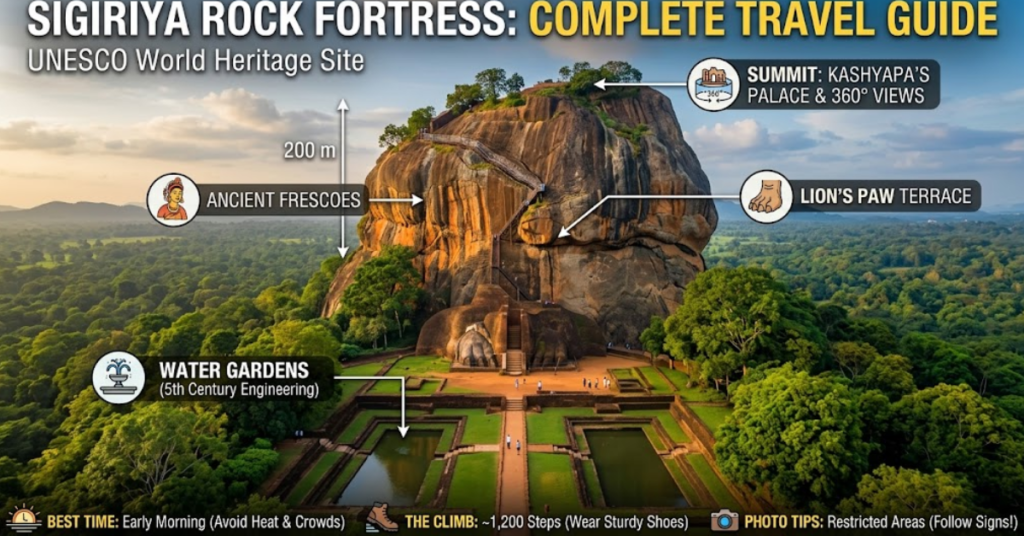
Sigiriya Rock Fortress: Complete Travel Guide for First-Time Visitors
Rising almost 200 metres above the jungle of central Sri Lanka, Sigiriya Rock Fortress is one of the most striking sights in South Asia. Locals call it Lion Rock, and it is a UNESCO World Heritage Site often described as the “Eighth Wonder of the World.” Part palace ruin, part art gallery, part engineering marvel, Sigiriya is the one stop that almost every Sri Lanka itinerary includes.
This guide covers its history, the highlights, and the practical tips that will make your visit easier.
A Short History of Sigiriya
The story of Sigiriya dates to the 5th century CE. According to Sri Lankan chronicles, King Kashyapa I seized the throne after overthrowing his father, King Dhatusena, and moved his capital from Anuradhapura to this massive rock. He built a palace on the summit and fortified the site with gardens, moats, and ramparts.
After Kashyapa’s death, the capital moved back, and the site became a Buddhist monastery for several centuries. It was later abandoned and reclaimed by the jungle until it was rediscovered and documented in the 19th century. UNESCO inscribed it as a World Heritage Site in 1982.
What to See at Sigiriya
1. The Water Gardens
Before you reach the rock, you walk through some of the oldest landscaped gardens in the world. The symmetrical layout includes pools, fountains, and channels. Some of the fountains still work during the rainy season, which says a lot about the engineering skill of the time.
2. The Boulder Gardens
Natural boulders, shaded pathways, and rock-cut steps lead you toward the base of the fortress. This is a good place to slow down and take photos before the climb.
3. The Frescoes
Halfway up, a spiral staircase leads to a sheltered pocket of the rock with ancient paintings of women in colourful dress, often called the Sigiriya maidens. Photography is restricted in this area, so check the signs and follow the staff’s instructions.
4. The Mirror Wall
Next to the stairway is a polished wall that once reflected like glass. Over the centuries, visitors scribbled poems and comments on it, and some of these verses date back more than a thousand years.
5. The Lion’s Paw Terrace
Two giant stone paws mark the entrance to the final ascent. The lion’s head that once framed the stairway has not survived, but the paws give you a sense of how dramatic the entrance must have been.
6. The Summit
The top is a wide plateau with the ruins of Kashyapa’s palace, cisterns, and foundations. The view over forests, lakes, and distant hills is the reward for the climb.
How Hard Is the Climb?
The climb involves roughly 1,200 steps, many of them steep and uneven, and some are metal staircases bolted onto the rock face. Most reasonably fit visitors can manage it in 1.5 to 2 hours return, including time for photos. Take breaks if you need them. The walk is more about heat and stairs than technical difficulty.
Also Read About: Best Scenic Hikes Near Seattle
Best Time to Visit
- Time of day: Arrive at opening time, usually early morning, to avoid both the heat and the tour-bus crowds. Late afternoon is the second-best option.
- Season: The drier months, roughly from January to April, are generally the most comfortable, though weather varies, so check a current forecast before you go.
- Avoid: Midday sun, when the rock heats up and the stairs become tiring.
Practical Tips
- Tickets: Foreign visitors pay a higher fee than locals, and prices change, so check the current rate on the official Sri Lankan Cultural Triangle website before your trip.
- What to wear: Light clothing, good walking shoes, a hat, and sunscreen. Cover your shoulders and knees if you plan to visit nearby temples.
- Water: Carry at least a litre per person. Prices at the top are higher.
- Keep it quiet: Wild bees and hornets nest on the rock, and loud noise can disturb them. Stay calm and follow staff instructions.
- Guides: A licensed guide adds a lot of context to the history. Agree on the price beforehand.
A Great Alternative: Pidurangala Rock
If you want a view of Sigiriya instead of from it, climb nearby Pidurangala Rock. It is cheaper, usually less crowded, and offers a clear view of Lion Rock, especially at sunrise or sunset. Many travellers do both on separate days.
How to Get There
Sigiriya is in Sri Lanka’s Cultural Triangle, about 170 km from Colombo, and the drive typically takes around 4 hours. It is close to Dambulla, and many people base themselves in Sigiriya, Dambulla, or Habarana for a night or two. Combining it with Polonnaruwa, Dambulla Cave Temple, and a village safari makes a full cultural itinerary.
Final Thoughts
Sigiriya is worth visiting for its history, its art, and the climb itself. Start early, pace yourself, and give yourself time to appreciate the gardens and frescoes on the way up. It is a highlight of any trip to Sri Lanka.
FAQs
Is Sigiriya worth visiting?
Yes. It combines ancient history, art, landscape design, and a spectacular view in one place.
How long does it take to climb Sigiriya?
Most people need around 1.5 to 2 hours for the round trip, depending on fitness and how long they spend at the top.
Is the climb suitable for children and older travellers?
Fit children and seniors can do it at a slow pace, but the steep stairs and heat can be tiring. Take breaks and start early.
Can I take photos at Sigiriya?
Yes, in most areas. Photography is restricted at the frescoes, so follow the signs.
Also Read More Informational Articles At: worldtrendsblog.com



Pingback: Cheapest Countries to Visit: 12 Cheap Places to Travel in 2026 - World trends